Estate Living And Architecture In Essex Fells
If you are searching for a place where architecture, privacy, and long-term character feel deliberately protected, Essex Fells stands out right away. This is not a typical suburban setting shaped by chance. It is a small borough with a distinct estate-like identity, and that identity is reinforced by its lot standards, architectural patterns, and preservation-minded local governance. If you want to understand what makes Essex Fells feel so enduring, this guide will walk you through it. Let’s dive in.
Essex Fells is a small Essex County borough with 2,244 residents, 806 housing units, and 1.4 square miles of land area, according to the Census Bureau. Essex County’s 2025 municipal guide lists the borough as incorporated in 1902. Those numbers help explain why the town feels intimate and closely held.
Its history also points to long-range planning. The borough’s water system dates to 1893, when developers were already planning for resident supply, and the borough purchased that system in 1920. That early infrastructure planning supports the sense that Essex Fells was conceived with permanence in mind.
One of the clearest reasons Essex Fells feels different is its low-intensity zoning framework. The borough’s land-development schedule sets RA-1 lots at 43,560 square feet with 175 feet of lot width and RA-2 lots at 31,500 square feet with 150 feet of lot width. In both RA districts, principal buildings are limited to 2½ stories or 35 feet, and impervious coverage is capped at 25%.
Those standards do more than regulate size. They shape the visual rhythm of the borough by preserving separation between homes, open yard space, and a quieter streetscape. When you drive through Essex Fells, that spacing reads as part of the experience.
Board minutes tied to the 2018 master plan add important context. They note that the floor-area-ratio rule is intended to keep properties in scale with surrounding properties, even when lots are very large. Other minutes describe goals such as maintaining the scale of existing residential development and protecting neighborhood character and value by limiting overbuilding and overcrowding.
For you as a buyer or homeowner, that means the borough’s sense of privacy and continuity is not accidental. It is supported by rules and planning language that aim to keep new changes subordinate to the existing setting.
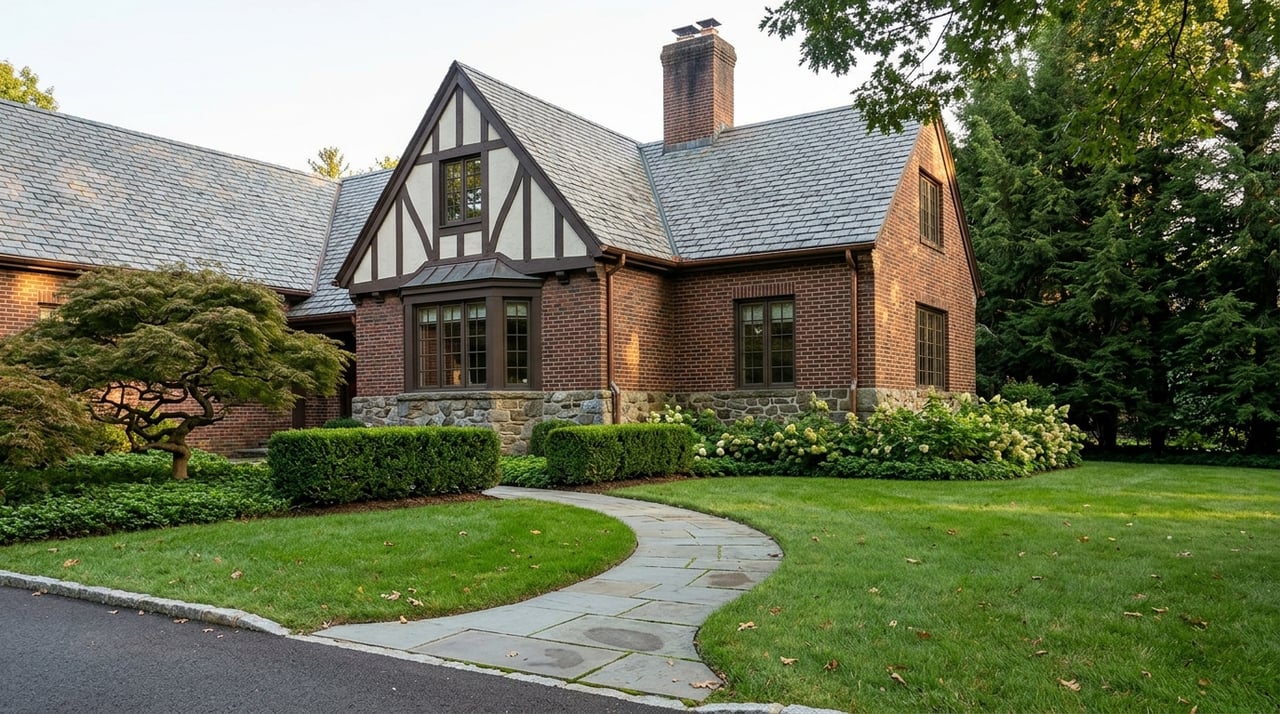
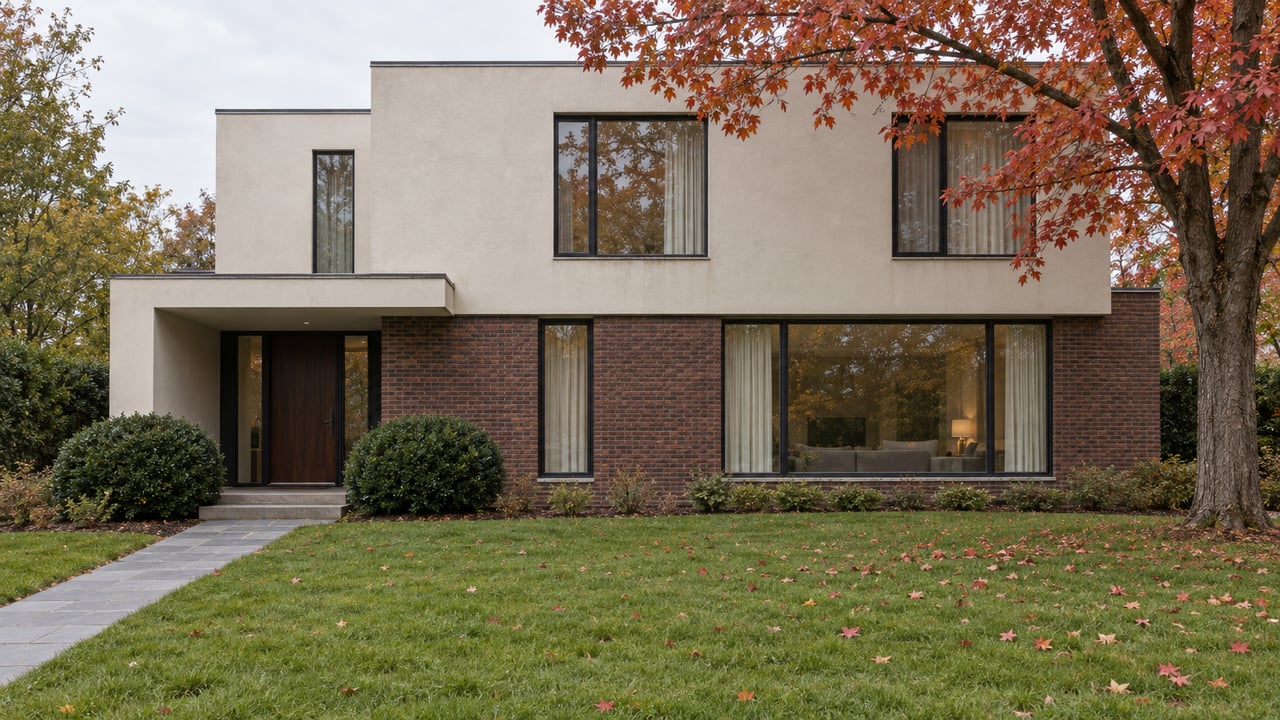
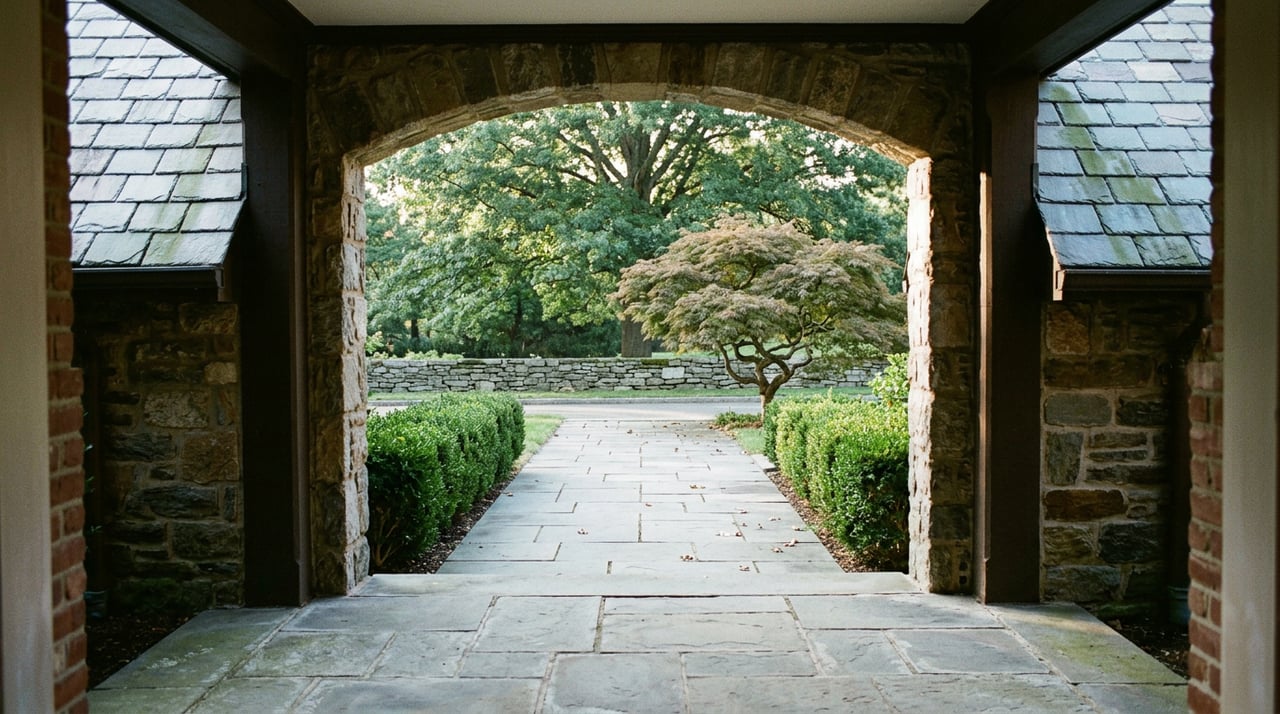
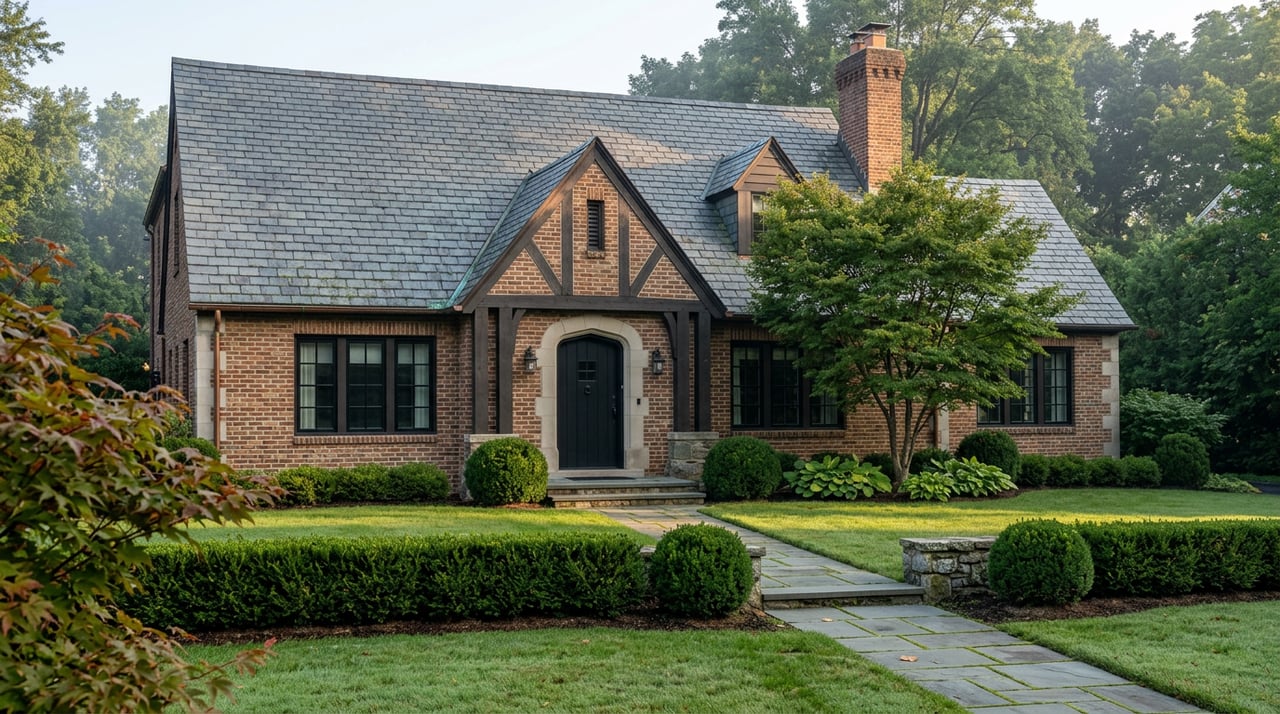
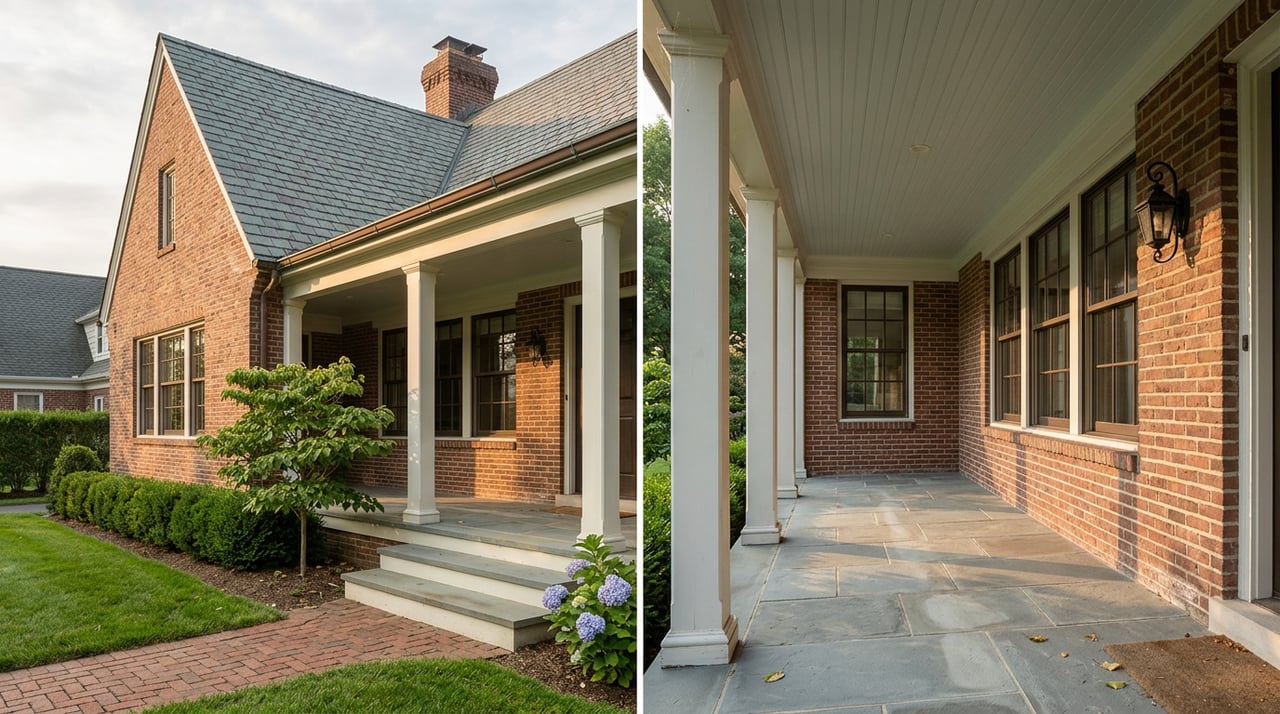
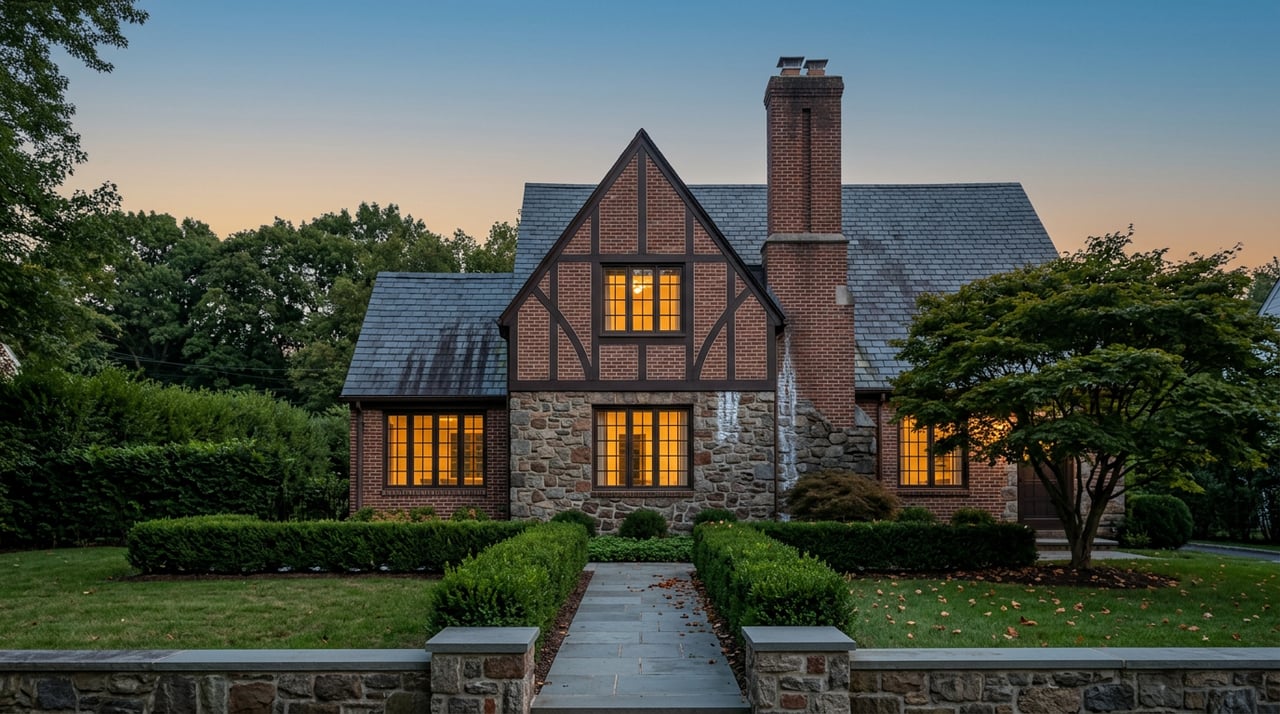
Essex Fells is also notable for the kinds of homes described in local board records. Minutes repeatedly reference historically rooted styles such as Palladian, center-hall Georgian Colonial, Tudor Revival, and Provincial-style homes. Materials mentioned in those records include limestone, copper roofing, stone detailing, and sunken gardens.
That architectural vocabulary matters. It suggests a borough defined less by repetition and more by individually composed homes with classic proportions and estate-style detailing. The result is a setting that feels layered and established rather than uniform.
In practical terms, buyers often respond to this kind of architectural consistency because it creates a stronger sense of place. Sellers also benefit from it, since homes are presented within a borough identity that already signals craftsmanship, scale, and long-term appeal.
Board minutes show that local review often centers on how a home or addition fits its surroundings. Discussions reference privacy, architectural integrity, and preserving light, air, and open space. That language helps explain why the borough maintains such a composed visual character.
Rather than allowing every property change to compete for attention, the process appears designed to support a more balanced streetscape. For homeowners, that often translates into a setting where architectural updates are considered in relation to the whole block and not just the individual lot.
The borough’s floodplain ordinance adds another preservation layer. It allows variances for historic structures only when repair or rehabilitation is the minimum necessary to preserve the structure’s historic character and design. That is a meaningful signal that older homes are not treated casually.
If you are considering a historic or architecturally significant property, this matters for both expectations and planning. It shows that preservation is part of the local framework, not just a marketing phrase.
A major part of Essex Fells’ appeal is the consistency of the environment over time. Current borough pages and board records show active attention to zoning, floodplain regulation, and service-line inventorying for older homes. That kind of oversight reflects a municipal culture that is engaged with the practical details of an established housing stock.
For buyers, this can be helpful because it reinforces the idea that the borough’s value is tied to more than any single home. Mature lots, strict zoning, and a strong preference for keeping changes in scale with the existing streetscape all work together to protect the overall setting.
For sellers, that continuity can be an advantage in positioning a property. In a market where buyers often pay for setting as much as square footage, Essex Fells offers a very specific sense of place.
While the borough itself feels calm and residential, the surrounding area adds a strong layer of lifestyle appeal. Essex Fells Country Club is a private, member-owned club in the borough offering golf, racquets, pool, and dining and events programming. Nearby in West Orange, Essex County Country Club notes that it was founded in 1887, reinforcing the area’s long-established private-club tradition.
That backdrop complements the borough’s estate identity. For many buyers, it adds to the sense that Essex Fells is connected to a broader lifestyle centered on tradition, recreation, and social gathering.
Montclair serves as a natural nearby dining and cultural hub. Its official tourism site describes the township as a downtown arts district known for world-class dining, with more than 100 outdoor dining spots across its restaurant districts. That gives Essex Fells residents easy access to a broad range of dining options without changing the borough’s quieter residential feel.
For arts and performance, the nearby choices are equally strong. Montclair Art Museum was founded in 1914 and holds more than 14,000 objects of American and Native American art. Paper Mill Playhouse in Millburn describes itself as a premier musical-theater venue and encourages visitors to pair performances with nearby dining.
Outdoor amenities are another major part of the area’s appeal. South Mountain Reservation covers 2,112 acres, Eagle Rock Reservation spans 408.33 acres, and Mills Reservation includes 157.15 acres of preserved open space and scenic overlooks. These nearby destinations make it easy to balance a refined residential setting with time outdoors.
If you value privacy at home but still want convenient access to trails, views, and green space, this part of Essex County offers a compelling mix. It is one more reason Essex Fells feels both tucked away and well connected.
If you are considering a home in Essex Fells, it helps to look beyond finishes and square footage. Pay close attention to lot dimensions, the relationship between the home and surrounding open space, and how architectural style contributes to the property’s presence. In a borough like this, setting and scale are part of the value proposition.
You should also understand that local character is supported by regulation. Zoning standards, board review, and preservation-minded policies all play a role in maintaining the borough’s identity. That can be reassuring if you are buying for the long term and want a setting with continuity.
If you are preparing to sell in Essex Fells, your home’s story should be framed within the borough’s larger identity. Buyers are not only evaluating the residence itself. They are also responding to the privacy, spacing, architectural heritage, and continuity of the setting.
That makes presentation especially important. Clear positioning around architectural details, lot scale, landscape composition, and the borough’s preservation-conscious feel can help a listing resonate more deeply with the right audience.
Essex Fells is best understood as an intentionally scaled, preservation-conscious borough where classic estate architecture and a strong sense of privacy work together. If you are buying or selling here, understanding that full picture can help you make more confident decisions. For tailored guidance on Essex County homes and refined marketing strategy, request a complimentary home valuation from The Wright Group.
Stay up to date on the latest real estate trends.
Your Seasonal Home Maintenance Checklist in Montclair, NJ, for a Market-Ready Home.
A Local Guide to Common Home Seller Mistakes in Montclair, NJ.
Trusted, local Listing Specialists who will help you achieve your real estate goals and tell your home's story like no one else can. The Wright Group will MAXIMIZE your home's equity with unrivaled storytelling power and exceptional sales expertise!