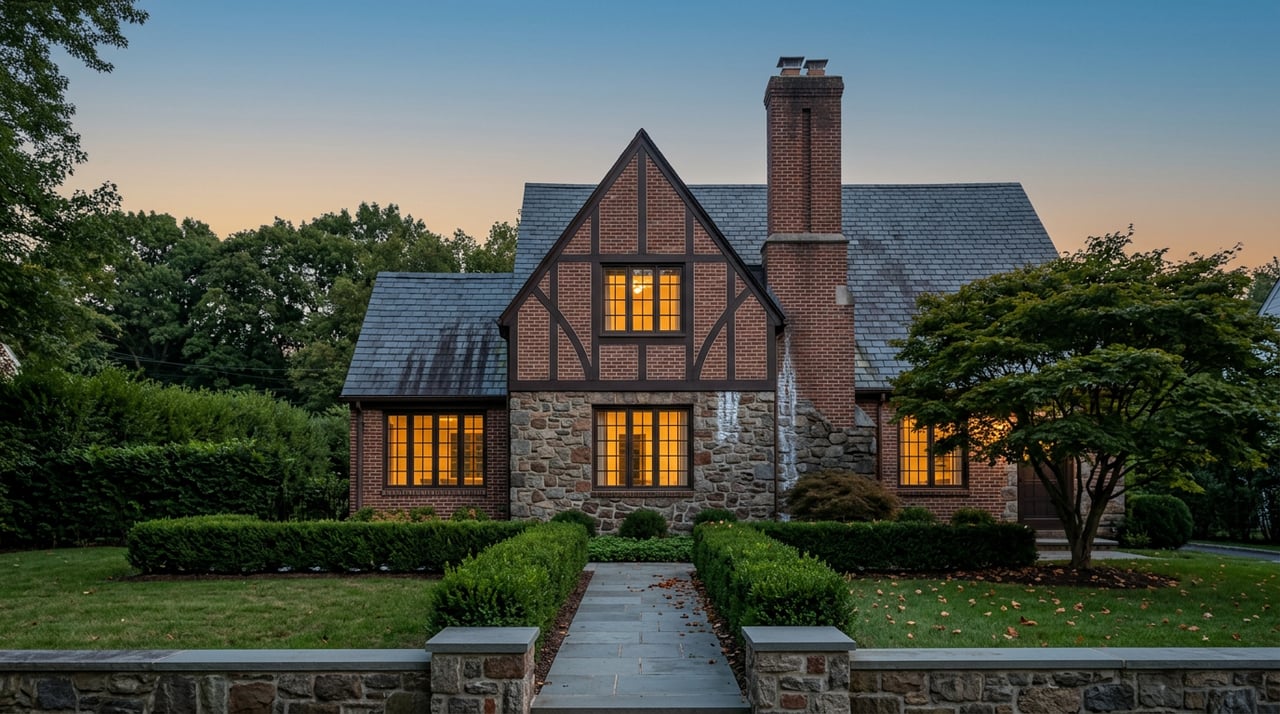
You have likely heard the buzz: Livingston homes are commanding seven-figure prices and still drawing strong interest. If you are eyeing a move in 2026, you want clear answers on what prices, supply, and competition mean for your budget and timing. In this guide, you will see where Livingston sits today, how it compares to nearby towns, and the smartest ways to compete for the right home. Let’s dive in.
Livingston market at a glance
Livingston is an upper-tier Essex County market with prices that remain well above county and national medians and that saw year-over-year appreciation in 2025.
- Zillow’s typical home value (ZHVI) for Livingston was about $1,042,663 as of January 31, 2026.
- Redfin’s ZIP 07039 median sale price was about $1,132,500 for January 2026.
- Local agent year-end summaries for 2025 showed average sale prices in the $1.25M to $1.36M range with continued above-ask outcomes in competitive tiers.
These figures come from different data sets and time windows, which explains the variation, but they all point to a high-demand, high-price market where quality listings still sell well.
How it compares locally
- Within Essex County, where medians often land in the $500k to $700k range depending on the source, Livingston sits in the upper tier.
- Montclair frequently posts higher medians or list prices than Livingston, although results vary by micro-neighborhood and property type. In both towns, you should rely on the most recent sold comparables within the immediate area when setting an offer strategy.
Supply and pace: what to expect
Inventory remains tight relative to demand. Active listings in late 2025 and early 2026 were often measured in the tens, not hundreds. County-level reporting described months of supply below balanced-market thresholds, which supports seller pricing power. The takeaway for you: good homes in the mid-market tend to move quickly.
Days on market (DOM) varies by source and price tier:
- Some listing snapshots showed medians in the 50 to 60 day range.
- Local MLS and agent recaps reported much faster turn times for well-priced homes under $1.5M, often in the teens to low 30s.
- Upper-end and highly customized homes typically take longer and see wider variation.
Always anchor on recent, block-by-block sold comps rather than townwide averages. Market speed can change within a few streets based on lot, updates, and presentation.
Price bands to watch
- Under $1M: Fastest to sell when well presented, often with multiple offers.
- $1M to $1.5M: The “sweet spot” with the strongest, most consistent competition.
- Above $2M: More varied outcomes; lot size, finishes, and layout drive price.
Neighborhoods, commute, and what drives value
Livingston offers a mix of established neighborhoods, convenient retail corridors, and leafy residential streets. Demand clusters where you find larger lots, proximity to green space, and easy access to services.
- Riker Hill: Known for larger lots and proximity to Riker Hill Art Park, with premium pricing for estate-style properties.
- Town Center and the Beaufort and Northfield corridors: Active resale areas with convenient access to retail and services. Prices vary block by block, so hyperlocal comps matter.
Commute and transit
Livingston does not have an in-town Midtown Direct rail terminal. Many commuters use nearby NJ Transit train stations in Millburn/Short Hills, South Orange, or Mountain Station, or they take NJ Transit buses. For example, NJ Transit’s Route 70 bus connects Livingston to Newark and regional rail hubs used for New York City commuting. You can check NJ Transit’s posted times on the Route 70 listing.
If you want a walkable train station as a daily priority, you might also weigh nearby towns with direct service and compare trade-offs in price, inventory, and commute.
Schools and pricing
Livingston’s public schools, including Livingston High School, earn strong local recognition and are a key reason many buyers target the township. Local coverage highlighted Livingston High in statewide rankings, and families often review official performance data before making an offer. You can see district-level metrics in the NJDOE School Performance Reports, and recent local coverage of rankings through sources like Patch.
Academic research finds that measured school quality is capitalized into home values. While the size of the effect varies by market, studies show a measurable price premium associated with stronger school performance. For context, see the literature summarized in this peer-reviewed article on school quality and housing prices. In practical terms, if top-rated schools are a priority for you, build that premium into your affordability model.
Buyer profile notes
Census data show Livingston’s median household income well above state and national medians, which supports sustained demand and price resilience. You can explore the township’s profile in Census QuickFacts.
New construction and redevelopment to watch
Livingston’s pipeline is shaped more by redevelopment than by large new single-family subdivisions. Two items to note:
- Livana Livingston: A roughly 280-unit, two-building rental community with a 55-plus component and some affordable units, which broke ground in 2025. This adds multifamily choices to the local mix. See coverage of the launch in Yield Pro.
- Affordable-housing obligations: Township officials reported Livingston met its Fourth Round obligation through 2035, which means large new single-family subdivisions are unlikely in the near term. Expect future supply to concentrate in redevelopment parcels that add multifamily and townhome product rather than large volumes of new single-family inventory. See local reporting via Patch.
For buyers, this mix expands rental and condo options but does not flood the market with entry single-family homes. That supports ongoing scarcity in the $1M to $1.5M band where many families are shopping.
What this means for your 2026 purchase
- Set expectations: Livingston prices cluster above Essex County medians and often trail or align under Montclair’s top-line figures. Fine-grain comparables matter more than town averages.
- Watch the mid-market: If your target is $1M to $1.5M, be ready to move quickly and present strong terms.
- Be selective above $2M: Presentation, lot, and finish levels drive outcomes. Patience and precise pricing intel can pay off.
- Consider commute trade-offs early: If daily rail access is vital, model the cost-and-time differences for Livingston’s bus-and-drive options versus rail-adjacent towns. Build that into your search map from day one.
- Quantify the school premium: If schools are central to your decision, compare recent closed sales inside your preferred attendance area and bake that premium into your budget.
How to write a winning offer
Tight inventory means terms matter. These steps can improve your odds while protecting your budget:
- Secure full lender pre-approval and present it with your offer. Sellers view this as a baseline signal of strength.
- Study hyperlocal comps from the last 6 to 12 months and set a firm walk-away number before you bid. Many successful offers in the mid-market band land at or above list, depending on the property.
- Use an escalation clause only when it makes strategic sense and is permitted by local practice. Require proof of competing offers per the clause and cap your top number.
- Tighten contingencies carefully. Consider a brief “walk-and-talk” with an inspector before offering so you can use shorter inspection windows or targeted repair thresholds without taking undue risk.
- Strengthen non-price terms. Larger earnest money, a closing date that fits the seller’s timeline, or a short rent-back can add real value.
- Plan for appraisal risk. If you are able, set aside a cushion or use targeted appraisal-gap language. Never exceed your pre-set budget.
- Work with a local agent who tracks intra-town micro-markets, knows seller preferences on clean offers versus escalation, and can surface off-market or coming-soon opportunities.
Livingston vs. Montclair: quick guide
- Price posture: Both sit at the top of Essex County. Montclair often posts higher medians, but block-level comps drive your true target value in either town.
- Commute: Montclair’s rail access can be a deciding factor for some buyers. Livingston offers bus service and access to nearby stations. Price, space, and commute priorities will shape the right fit for you.
- Product mix: Livingston’s near-term pipeline leans multifamily via redevelopment. Single-family scarcity, especially in the mid-market, is likely to persist.
Ready to tour Livingston homes?
If you are weighing Livingston against Montclair or nearby towns, you deserve clear, data-forward guidance and a strategy that fits your goals. From pricing to presentation to offer structure, we will help you move with confidence and capture the right home at the right terms. Connect with The Wright Group to start your search.
FAQs
Is Livingston more expensive than Montclair for buyers?
- Both are upper-tier Essex County markets. Montclair often posts higher medians, but results vary by neighborhood and property type. Use recent sold comps near your target address to set an offer range.
How do schools affect Livingston home prices?
- Research shows measured school quality is capitalized into home prices. In Livingston, strong district performance and reputation are reflected in buyer demand, so you should model a meaningful premium when comparing homes in preferred attendance zones. See the NJDOE reports for official data.
Does new development mean more single-family choices soon?
- Near-term additions are largely multifamily or townhome units via redevelopment, not large new single-family subdivisions. That pattern broadens choices but is unlikely to lift single-family inventory enough to ease mid-market competition quickly. See the Livana coverage in Yield Pro.
What transit options do Livingston commuters use?
- Many residents drive to nearby train stations or take NJ Transit buses. Route 70 connects Livingston to Newark and regional rail hubs used for NYC commuting. Check current times on NJ Transit’s Route 70 listing.
Will the Livingston Mall redevelopment lower single-family prices?
- It is designed to add multifamily and townhome units through redevelopment parcels. That expands local housing choice but is unlikely to flood the single-family market. Scarcity-driven price support for detached homes is likely to persist. For township context, see the redevelopment FAQ at Livingston Township.